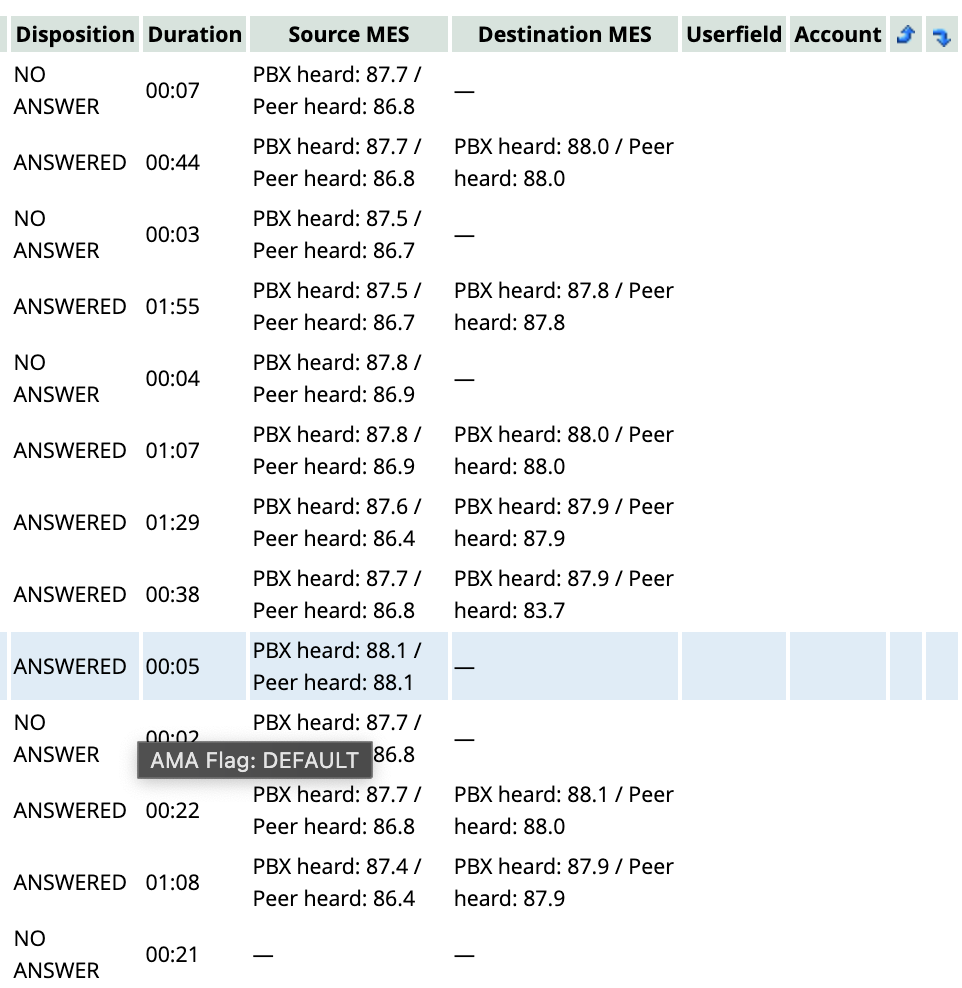
Nice! I have a block in my extensions_custom.conf that adds stats to the CDR Userfield. While it doesn’t use those stats to calculate and display a Mean Opinion Score, if there are user trouble reports as to call quality I can pop into the CDR’s and quickly do the math.
[macro-hangupcall-custom]
; start of QoS reporting
exten => s,1,NoOp(Start QoS)
exten => s,n,NoOp(Local Stream ID: ${CHANNEL(rtcp,local_ssrc)})
exten => s,n,NoOp(Remote Stream ID: ${CHANNEL(rtcp,remote_ssrc)})
exten => s,n,NoOp(Packets Sent: ${CHANNEL(rtcp,txcount)})
exten => s,n,NoOp(Packets Received: ${CHANNEL(rtcp,rxcount)})
exten => s,n,NoOp(Local RX Packet Loss Max: ${CHANNEL(rtcp,local_maxrxploss)})
exten => s,n,NoOp(Local RX Packet Loss Min: ${CHANNEL(rtcp,local_minrxploss)})
exten => s,n,NoOp(Local RX Packet Loss: ${CHANNEL(rtcp,rxploss)})
exten => s,n,NoOp(Local RX Packet Loss Norm Dev: ${CHANNEL(rtcp,local_normdevrxploss)})
exten => s,n,NoOp(Local RX Packet Loss Std Dev: ${CHANNEL(rtcp,local_stdevrxploss)})
exten => s,n,NoOp(Local TX Packet Loss: ${CHANNEL(rtcp,txploss)})
exten => s,n,NoOp(Remote RX Packet Loss Max: ${CHANNEL(rtcp,remote_maxrxploss)})
exten => s,n,NoOp(Remote RX Packet Loss Min: ${CHANNEL(rtcp,remote_minrxploss)})
exten => s,n,NoOp(Remote RX Packet Loss Norm Deviation: ${CHANNEL(rtcp,remote_normdevrxploss)})
exten => s,n,NoOp(Remote RX Packet Loss Std Deviation: ${CHANNEL(rtcp,remote_stdevrxploss)})
exten => s,n,NoOp(Round Trip Time: ${CHANNEL(rtcp,rtt)})
exten => s,n,NoOp(Round Trip Time Max: ${CHANNEL(rtcp,maxrtt)})
exten => s,n,NoOp(Round Trip Time Min: ${CHANNEL(rtcp,minrtt)})
exten => s,n,NoOp(Round Trip Time Norm Dev: ${CHANNEL(rtcp,normdevrtt)})
exten => s,n,NoOp(Round Trip Time Std Dev: ${CHANNEL(rtcp,stdevrtt)})
exten => s,n,NoOp(Local RX Jitter: ${CHANNEL(rtcp,rxjitter)})
exten => s,n,NoOp(Local TX Jitter: ${CHANNEL(rtcp,txjitter)})
exten => s,n,NoOp(Local Jitter Max: ${CHANNEL(rtcp,local_maxjitter)})
exten => s,n,NoOp(Local Jitter Min: ${CHANNEL(rtcp,local_minjitter)})
exten => s,n,NoOp(Local Jitter Norm Dev: ${CHANNEL(rtcp,local_normdevjitter)})
exten => s,n,NoOp(Local Jitter Std Dev: ${CHANNEL(rtcp,local_stdevjitter)})
exten => s,n,NoOp(Remote Jitter Max: ${CHANNEL(rtcp,remote_maxjitter)})
exten => s,n,NoOp(Remote Jitter Min: ${CHANNEL(rtcp,remote_minjitter)})
exten => s,n,NoOp(Remote Jitter Norm Dev: ${CHANNEL(rtcp,remote_normdevjitter)})
exten => s,n,NoOp(Remote Jitter Std Dev: ${CHANNEL(rtcp,remote_stdevjitter)})
;exten => s,n,Set(CDR(userfield)=${CDR(userfield)} Local Stream ID: ${CHANNEL(rtcp,local_ssrc)})
;exten => s,n,Set(CDR(userfield)=${CDR(userfield)} Remote Stream ID: ${CHANNEL(rtcp,remote_ssrc)})
exten => s,n,Set(CDR(userfield)=${CDR(userfield)} Packets Sent: ${CHANNEL(rtcp,txcount)})
exten => s,n,Set(CDR(userfield)=${CDR(userfield)} Packets Received: ${CHANNEL(rtcp,rxcount)})
;exten => s,n,Set(CDR(userfield)=${CDR(userfield)} Local RX Packet Loss Max: ${CHANNEL(rtcp,local_maxrxploss)})
;exten => s,n,Set(CDR(userfield)=${CDR(userfield)} Local RX Packet Loss Min: ${CHANNEL(rtcp,local_minrxploss)})
exten => s,n,Set(CDR(userfield)=${CDR(userfield)} Local RX Packet Loss: ${CHANNEL(rtcp,rxploss)})
;exten => s,n,Set(CDR(userfield)=${CDR(userfield)} Local RX Packet Loss Norm Dev: ${CHANNEL(rtcp,local_normdevrxploss)})
;exten => s,n,Set(CDR(userfield)=${CDR(userfield)} Local RX Packet Loss Std Dev: ${CHANNEL(rtcp,local_stdevrxploss)})
exten => s,n,Set(CDR(userfield)=${CDR(userfield)} Local TX Packet Loss: ${CHANNEL(rtcp,txploss)})
;exten => s,n,Set(CDR(userfield)=${CDR(userfield)} Remote RX Packet Loss Max: ${CHANNEL(rtcp,remote_maxrxploss)})
;exten => s,n,Set(CDR(userfield)=${CDR(userfield)} Remote RX Packet Loss Min: ${CHANNEL(rtcp,remote_minrxploss)})
;exten => s,n,Set(CDR(userfield)=${CDR(userfield)} Remote RX Packet Loss Norm Deviation: ${CHANNEL(rtcp,remote_normdevrxploss)})
;exten => s,n,Set(CDR(userfield)=${CDR(userfield)} Remote RX Packet Loss Std Deviation: ${CHANNEL(rtcp,remote_stdevrxploss)})
;exten => s,n,Set(CDR(userfield)=${CDR(userfield)} Round Trip Time: ${CHANNEL(rtcp,rtt)})
;exten => s,n,Set(CDR(userfield)=${CDR(userfield)} Round Trip Time Max: ${CHANNEL(rtcp,maxrtt)})
;exten => s,n,Set(CDR(userfield)=${CDR(userfield)} Round Trip TIme Min: ${CHANNEL(rtcp,minrtt)})
;exten => s,n,Set(CDR(userfield)=${CDR(userfield)} Round Trip Time Norm Dev: ${CHANNEL(rtcp,normdevrtt)})
;exten => s,n,Set(CDR(userfield)=${CDR(userfield)} Round Trip Time Std Dev: ${CHANNEL(rtcp,stdevrtt)})
exten => s,n,Set(CDR(userfield)=${CDR(userfield)} Local RX Jitter: ${CHANNEL(rtcp,rxjitter)})
exten => s,n,Set(CDR(userfield)=${CDR(userfield)} Local TX Jitter: ${CHANNEL(rtcp,txjitter)})
exten => s,n,Set(CDR(userfield)=${CDR(userfield)} Local Jitter Max: ${CHANNEL(rtcp,local_maxjitter)})
exten => s,n,Set(CDR(userfield)=${CDR(userfield)} Local Jitter Min: ${CHANNEL(rtcp,local_minjitter)})
exten => s,n,Set(CDR(userfield)=${CDR(userfield)} Local Jitter Norm Dev: ${CHANNEL(rtcp,local_normdevjitter)})
exten => s,n,Set(CDR(userfield)=${CDR(userfield)} Local Jitter Std Dev: ${CHANNEL(rtcp,local_stdevjitter)})
;exten => s,n,Set(CDR(userfield)=${CDR(userfield)} Remote Jitter Max: ${CHANNEL(rtcp,remote_maxjitter)})
;exten => s,n,Set(CDR(userfield)=${CDR(userfield)} Remote Jitter Min: ${CHANNEL(rtcp,remote_minjitter)})
;exten => s,n,Set(CDR(userfield)=${CDR(userfield)} Remote Jitter Norm Dev: ${CHANNEL(rtcp,remote_normdevjitter)})
;exten => s,n,Set(CDR(userfield)=${CDR(userfield)} Remote Jitter Std Dev: ${CHANNEL(rtcp,remote_stdevjitter)})
exten => s,n(continue),NoOp(End of QoS)