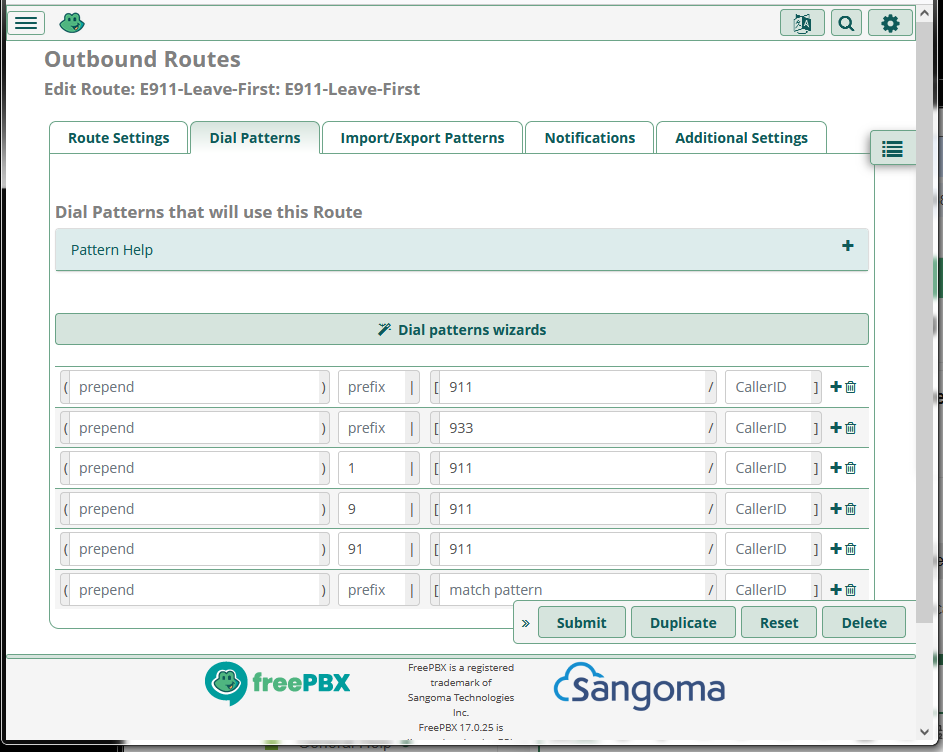
VoIP.ms & Twilio incoming calls work great. However I have outbound routes set to VoIP.ms ip then Twilio.No matter what I try I can’t seem to get an outgoing call to go through. The dump below is only for the Voip trunks I had disabled the Twilio
root@RasPBX:~# asterisk -rvvv
Asterisk 22.7.0, Copyright (C) 1999 - 2025, Sangoma Technologies Corporation and others.
Created by Mark Spencer [email protected]
Asterisk comes with ABSOLUTELY NO WARRANTY; type ‘core show warranty’ for details.
This is free software, with components licensed under the GNU General Public
License version 2 and other licenses; you are welcome to redistribute it under
certain conditions. Type ‘core show license’ for details.
Connected to Asterisk 22.7.0 currently running on RasPBX (pid = 1092)
– Remote UNIX connection
== Using SIP RTP Audio TOS bits 184
== Using SIP RTP Audio TOS bits 184 in TCLASS field.
== Using SIP RTP Audio CoS mark 5
– Executing [260747XXXX@from-internal:1] Gosub(“PJSIP/201-00000038”, “macro-user-callerid,s,1(LIMIT,EXTERNAL)”) in new stack
– Executing [s@macro-user-callerid:1] Set(“PJSIP/201-00000038”, “TOUCH_MONITOR=1770134424.56”) in new stack
– Executing [s@macro-user-callerid:2] Set(“PJSIP/201-00000038”, “CHANCONTEXT=”) in new stack
– Executing [s@macro-user-callerid:3] Set(“PJSIP/201-00000038”, “CHANCONTEXT=”) in new stack
– Executing [s@macro-user-callerid:4] Set(“PJSIP/201-00000038”, “CHANEXTENCONTEXT=201-00000038”) in new stack
– Executing [s@macro-user-callerid:5] Set(“PJSIP/201-00000038”, “CHANEXTEN=201-00000038”) in new stack
– Executing [s@macro-user-callerid:6] Set(“PJSIP/201-00000038”, “CALLERID(number)=201”) in new stack
– Executing [s@macro-user-callerid:7] Set(“PJSIP/201-00000038”, “AMPUSER=201”) in new stack
– Executing [s@macro-user-callerid:8] Set(“PJSIP/201-00000038”, “HOTDESCKCHAN=201-00000038”) in new stack
– Executing [s@macro-user-callerid:9] Set(“PJSIP/201-00000038”, “HOTDESKEXTEN=201”) in new stack
– Executing [s@macro-user-callerid:10] Set(“PJSIP/201-00000038”, “HOTDESKCALL=0”) in new stack
– Executing [s@macro-user-callerid:11] ExecIf(“PJSIP/201-00000038”, “0?Set(HOTDESKCALL=1)”) in new stack
– Executing [s@macro-user-callerid:12] ExecIf(“PJSIP/201-00000038”, “0?Set(CALLERID(name)=)”) in new stack
– Executing [s@macro-user-callerid:13] GotoIf(“PJSIP/201-00000038”, “0?report”) in new stack
– Executing [s@macro-user-callerid:14] ExecIf(“PJSIP/201-00000038”, “1?Set(REALCALLERIDNUM=201)”) in new stack
– Executing [s@macro-user-callerid:15] Set(“PJSIP/201-00000038”, “AMPUSER=201”) in new stack
– Executing [s@macro-user-callerid:16] GotoIf(“PJSIP/201-00000038”, “0?limit”) in new stack
– Executing [s@macro-user-callerid:17] Set(“PJSIP/201-00000038”, “AMPUSERCIDNAME=FXO1”) in new stack
– Executing [s@macro-user-callerid:18] ExecIf(“PJSIP/201-00000038”, “0?Set(__CIDMASQUERADING=TRUE)”) in new stack
– Executing [s@macro-user-callerid:19] GotoIf(“PJSIP/201-00000038”, “0?report”) in new stack
– Executing [s@macro-user-callerid:20] Set(“PJSIP/201-00000038”, “AMPUSERCID=201”) in new stack
– Executing [s@macro-user-callerid:21] Set(“PJSIP/201-00000038”, “__DIAL_OPTIONS=”) in new stack
– Executing [s@macro-user-callerid:22] Set(“PJSIP/201-00000038”, “CALLERID(all)=“FXO1” <201>”) in new stack
– Executing [s@macro-user-callerid:23] ExecIf(“PJSIP/201-00000038”, “0?Set(CUSDIAL=)”) in new stack
– Executing [s@macro-user-callerid:24] ExecIf(“PJSIP/201-00000038”, “0?Set(CALLERID(all)=“FXO1” <201>)”) in new stack
– Executing [s@macro-user-callerid:25] GotoIf(“PJSIP/201-00000038”, “0?limit”) in new stack
– Executing [s@macro-user-callerid:26] ExecIf(“PJSIP/201-00000038”, “1?Set(GROUP(concurrency_limit)=201)”) in new stack
– Executing [s@macro-user-callerid:27] NoOp(“PJSIP/201-00000038”, “Macro depricated!! To keep the same line numbers”) in new stack
– Executing [s@macro-user-callerid:28] NoOp(“PJSIP/201-00000038”, “Macro depricated !! To keep the same line numbers”) in new stack
– Executing [s@macro-user-callerid:29] GotoIf(“PJSIP/201-00000038”, “1?continue”) in new stack
– Goto (macro-user-callerid,s,47)
– Executing [s@macro-user-callerid:47] Set(“PJSIP/201-00000038”, “CALLERID(number)=201”) in new stack
– Executing [s@macro-user-callerid:48] Set(“PJSIP/201-00000038”, “CALLERID(name)=FXO1”) in new stack
– Executing [s@macro-user-callerid:49] GotoIf(“PJSIP/201-00000038”, “0?cnum”) in new stack
– Executing [s@macro-user-callerid:50] Set(“PJSIP/201-00000038”, “CDR(cnam)=FXO1”) in new stack
– Executing [s@macro-user-callerid:51] Set(“PJSIP/201-00000038”, “CDR(cnum)=201”) in new stack
– Executing [s@macro-user-callerid:52] Return(“PJSIP/201-00000038”, “”) in new stack
– Executing [260747XXXX@from-internal:2] Gosub(“PJSIP/201-00000038”, “sub-record-check,s,1(out,260747XXXX,dontcare)”) in new stack
– Executing [s@sub-record-check:1] GotoIf(“PJSIP/201-00000038”, “0?initialized”) in new stack
– Executing [s@sub-record-check:2] Set(“PJSIP/201-00000038”, “__REC_STATUS=INITIALIZED”) in new stack
– Executing [s@sub-record-check:3] Set(“PJSIP/201-00000038”, “NOW=1770134424”) in new stack
– Executing [s@sub-record-check:4] Set(“PJSIP/201-00000038”, “__DAY=03”) in new stack
– Executing [s@sub-record-check:5] Set(“PJSIP/201-00000038”, “__MONTH=02”) in new stack
– Executing [s@sub-record-check:6] Set(“PJSIP/201-00000038”, “__YEAR=2026”) in new stack
– Executing [s@sub-record-check:7] Set(“PJSIP/201-00000038”, “__TIMESTR=20260203-110024”) in new stack
– Executing [s@sub-record-check:8] Set(“PJSIP/201-00000038”, “__FROMEXTEN=201”) in new stack
– Executing [s@sub-record-check:9] Set(“PJSIP/201-00000038”, “__MON_FMT=wav”) in new stack
– Executing [s@sub-record-check:10] NoOp(“PJSIP/201-00000038”, “Recordings initialized”) in new stack
– Executing [s@sub-record-check:11] ExecIf(“PJSIP/201-00000038”, “0?Set(ARG3=dontcare)”) in new stack
– Executing [s@sub-record-check:12] Set(“PJSIP/201-00000038”, “REC_POLICY_MODE_SAVE=”) in new stack
– Executing [s@sub-record-check:13] ExecIf(“PJSIP/201-00000038”, “0?Set(REC_STATUS=NO)”) in new stack
– Executing [s@sub-record-check:14] GotoIf(“PJSIP/201-00000038”, “3?checkaction”) in new stack
– Goto (sub-record-check,s,17)
– Executing [s@sub-record-check:17] GotoIf(“PJSIP/201-00000038”, “1?sub-record-check,out,1”) in new stack
– Goto (sub-record-check,out,1)
– Executing [out@sub-record-check:1] NoOp(“PJSIP/201-00000038”, “Outbound Recording Check from 201 to 260747XXXX”) in new stack
– Executing [out@sub-record-check:2] Set(“PJSIP/201-00000038”, “RECMODE=dontcare”) in new stack
– Executing [out@sub-record-check:3] ExecIf(“PJSIP/201-00000038”, “1?Goto(routewins)”) in new stack
– Goto (sub-record-check,out,7)
– Executing [out@sub-record-check:7] Gosub(“PJSIP/201-00000038”, “recordcheck,1(dontcare,out,260747XXXX)”) in new stack
– Executing [recordcheck@sub-record-check:1] NoOp(“PJSIP/201-00000038”, “Starting recording check against dontcare”) in new stack
– Executing [recordcheck@sub-record-check:2] Goto(“PJSIP/201-00000038”, “dontcare”) in new stack
– Goto (sub-record-check,recordcheck,3)
– Executing [recordcheck@sub-record-check:3] Return(“PJSIP/201-00000038”, “”) in new stack
– Executing [out@sub-record-check:8] Return(“PJSIP/201-00000038”, “”) in new stack
– Executing [260747XXXX@from-internal:3] Set(“PJSIP/201-00000038”, “_ROUTEID=4”) in new stack
– Executing [260747XXXX@from-internal:4] Set(“PJSIP/201-00000038”, “_ROUTENAME=VOoIP.ms_Outbound”) in new stack
– Executing [260747XXXX@from-internal:5] Set(“PJSIP/201-00000038”, “MOHCLASS=default”) in new stack
– Executing [260747XXXX@from-internal:6] ExecIf(“PJSIP/201-00000038”, “0?Set(TRUNKCIDOVERRIDE=“MY NAME”<260387XXXX>)”) in new stack
– Executing [260747XXXX@from-internal:7] Set(“PJSIP/201-00000038”, “_CALLERIDNAMEINTERNAL=FXO1”) in new stack
– Executing [260747XXXX@from-internal:8] Set(“PJSIP/201-00000038”, “_CALLERIDNUMINTERNAL=201”) in new stack
– Executing [260747XXXX@from-internal:9] Set(“PJSIP/201-00000038”, “_EMAILNOTIFICATION=FALSE”) in new stack
– Executing [260747XXXX@from-internal:10] Set(“PJSIP/201-00000038”, “_NODEST=”) in new stack
– Executing [260747XXXX@from-internal:11] Gosub(“PJSIP/201-00000038”, “macro-dialout-trunk,s,1(2,260747XXXX,off)”) in new stack
– Executing [s@macro-dialout-trunk:1] Set(“PJSIP/201-00000038”, “DIAL_TRUNK=2”) in new stack
– Executing [s@macro-dialout-trunk:2] ExecIf(“PJSIP/201-00000038”, “0?Set(DIAL_OPTIONS=)”) in new stack
– Executing [s@macro-dialout-trunk:3] ExecIf(“PJSIP/201-00000038”, “0?Set(DIAL_OPTIONS=)”) in new stack
– Executing [s@macro-dialout-trunk:4] ExecIf(“PJSIP/201-00000038”, “0?Set(DIAL_OPTIONS=)”) in new stack
– Executing [s@macro-dialout-trunk:5] GosubIf(“PJSIP/201-00000038”, “0?sub-pincheck,s,1()”) in new stack
– Executing [s@macro-dialout-trunk:6] ExecIf(“PJSIP/201-00000038”, “0?Set(CALLERID(num)=201)”) in new stack
– Executing [s@macro-dialout-trunk:7] GotoIf(“PJSIP/201-00000038”, “0?disabletrunk,1”) in new stack
– Executing [s@macro-dialout-trunk:8] Set(“PJSIP/201-00000038”, “DIAL_NUMBER=260747XXXX”) in new stack
– Executing [s@macro-dialout-trunk:9] Set(“PJSIP/201-00000038”, “DIAL_TRUNK_OPTIONS=”) in new stack
– Executing [s@macro-dialout-trunk:10] Set(“PJSIP/201-00000038”, “OUTBOUND_GROUP=OUT_2”) in new stack
– Executing [s@macro-dialout-trunk:11] Set(“PJSIP/201-00000038”, “DIAL_TRUNK_OPTIONS=R”) in new stack
– Executing [s@macro-dialout-trunk:12] ExecIf(“PJSIP/201-00000038”, “0?Set(DIAL_TRUNK_OPTIONS=R)”) in new stack
– Executing [s@macro-dialout-trunk:13] GotoIf(“PJSIP/201-00000038”, “0?nomax”) in new stack
– Executing [s@macro-dialout-trunk:14] GotoIf(“PJSIP/201-00000038”, “0?chanfull”) in new stack
– Executing [s@macro-dialout-trunk:15] GotoIf(“PJSIP/201-00000038”, “0?skipoutcid”) in new stack
– Executing [s@macro-dialout-trunk:16] Gosub(“PJSIP/201-00000038”, “macro-outbound-callerid,s,1(2)”) in new stack
– Executing [s@macro-outbound-callerid:1] NoOp(“PJSIP/201-00000038”, “201”) in new stack
– Executing [s@macro-outbound-callerid:2] NoOp(“PJSIP/201-00000038”, “”) in new stack
– Executing [s@macro-outbound-callerid:3] NoOp(“PJSIP/201-00000038”, “off”) in new stack
– Executing [s@macro-outbound-callerid:4] ExecIf(“PJSIP/201-00000038”, “0?Set(CALLERID(name-pres)=)”) in new stack
– Executing [s@macro-outbound-callerid:5] ExecIf(“PJSIP/201-00000038”, “0?Set(CALLERID(num-pres)=)”) in new stack
– Executing [s@macro-outbound-callerid:6] Set(“PJSIP/201-00000038”, “HOTDESCKCHAN=201-00000038”) in new stack
– Executing [s@macro-outbound-callerid:7] Set(“PJSIP/201-00000038”, “HOTDESKEXTEN=201”) in new stack
– Executing [s@macro-outbound-callerid:8] Set(“PJSIP/201-00000038”, “HOTDESKCALL=0”) in new stack
– Executing [s@macro-outbound-callerid:9] ExecIf(“PJSIP/201-00000038”, “0?Set(HOTDESKCALL=1)”) in new stack
– Executing [s@macro-outbound-callerid:10] ExecIf(“PJSIP/201-00000038”, “0?Set(CALLERID(name)=)”) in new stack
– Executing [s@macro-outbound-callerid:11] Set(“PJSIP/201-00000038”, “ALLOWTHISROUTE=NO”) in new stack
– Executing [s@macro-outbound-callerid:12] ExecIf(“PJSIP/201-00000038”, “0?Set(ALLOWTHISROUTE=YES)”) in new stack
– Executing [s@macro-outbound-callerid:13] ExecIf(“PJSIP/201-00000038”, “0?Hangup()”) in new stack
– Executing [s@macro-outbound-callerid:14] ExecIf(“PJSIP/201-00000038”, “0?Set(REALCALLERIDNUM=201)”) in new stack
– Executing [s@macro-outbound-callerid:15] ExecIf(“PJSIP/201-00000038”, “0?Set(AMPUSER=201)”) in new stack
– Executing [s@macro-outbound-callerid:16] GotoIf(“PJSIP/201-00000038”, “1?normcid”) in new stack
– Goto (macro-outbound-callerid,s,20)
– Executing [s@macro-outbound-callerid:20] Set(“PJSIP/201-00000038”, “USEROUTCID=FXO1”) in new stack
– Executing [s@macro-outbound-callerid:21] Set(“PJSIP/201-00000038”, “EMERGENCYCID=”) in new stack
– Executing [s@macro-outbound-callerid:22] ExecIf(“PJSIP/201-00000038”, “0?Set(EMERGENCYCID=)”) in new stack
– Executing [s@macro-outbound-callerid:23] Set(“PJSIP/201-00000038”, “TRUNKOUTCID=“MY NAME” <260387XXXX>”) in new stack
– Executing [s@macro-outbound-callerid:24] GotoIf(“PJSIP/201-00000038”, “1?trunkcid”) in new stack
– Goto (macro-outbound-callerid,s,30)
– Executing [s@macro-outbound-callerid:30] ExecIf(“PJSIP/201-00000038”, “1?Set(CALLERID(all)=“MY NAME” <260387XXXX>)”) in new stack
– Executing [s@macro-outbound-callerid:31] ExecIf(“PJSIP/201-00000038”, “1?Set(CALLERID(all)=FXO1)”) in new stack
– Executing [s@macro-outbound-callerid:32] ExecIf(“PJSIP/201-00000038”, “0?Set(CALLERID(all)=)”) in new stack
– Executing [s@macro-outbound-callerid:33] ExecIf(“PJSIP/201-00000038”, “0?Set(CALLERID(all)=201)”) in new stack
– Executing [s@macro-outbound-callerid:34] ExecIf(“PJSIP/201-00000038”, “0?Set(CALLERID(all)=201)”) in new stack
– Executing [s@macro-outbound-callerid:35] Set(“PJSIP/201-00000038”, “TIOHIDE=no”) in new stack
– Executing [s@macro-outbound-callerid:36] ExecIf(“PJSIP/201-00000038”, “0?Set(CALLERID(name-pres)=prohib_passed_screen)”) in new stack
– Executing [s@macro-outbound-callerid:37] ExecIf(“PJSIP/201-00000038”, “0?Set(CALLERID(num-pres)=prohib_passed_screen)”) in new stack
– Executing [s@macro-outbound-callerid:38] ExecIf(“PJSIP/201-00000038”, “0?Set(CALLERID(name-pres)=prohib_passed_screen)”) in new stack
– Executing [s@macro-outbound-callerid:39] ExecIf(“PJSIP/201-00000038”, “0?Set(CALLERID(num-pres)=prohib_passed_screen)”) in new stack
– Executing [s@macro-outbound-callerid:40] Set(“PJSIP/201-00000038”, “CDR(outbound_cnum)=”) in new stack
– Executing [s@macro-outbound-callerid:41] Set(“PJSIP/201-00000038”, “CDR(outbound_cnam)=FXO1”) in new stack
– Executing [s@macro-outbound-callerid:42] Return(“PJSIP/201-00000038”, “”) in new stack
– Executing [s@macro-dialout-trunk:17] GosubIf(“PJSIP/201-00000038”, “0?sub-flp-2,s,1()”) in new stack
– Executing [s@macro-dialout-trunk:18] Set(“PJSIP/201-00000038”, “OUTNUM=260747XXXX”) in new stack
– Executing [s@macro-dialout-trunk:19] Set(“PJSIP/201-00000038”, “custom=PJSIP”) in new stack
– Executing [s@macro-dialout-trunk:20] ExecIf(“PJSIP/201-00000038”, “0?Set(DIAL_TRUNK_MOH=default)”) in new stack
– Executing [s@macro-dialout-trunk:21] ExecIf(“PJSIP/201-00000038”, “0?Set(DIAL_TRUNK_OPTIONS=RU(macro-confirm))”) in new stack
– Executing [s@macro-dialout-trunk:22] Gosub(“PJSIP/201-00000038”, “macro-dialout-trunk-predial-hook,s,1()”) in new stack
– Executing [s@macro-dialout-trunk-predial-hook:1] Return(“PJSIP/201-00000038”, “”) in new stack
– Executing [s@macro-dialout-trunk:23] GotoIf(“PJSIP/201-00000038”, “0?bypass,1”) in new stack
– Executing [s@macro-dialout-trunk:24] ExecIf(“PJSIP/201-00000038”, “1?Set(CONNECTEDLINE(num,i)=260747XXXX)”) in new stack
– Executing [s@macro-dialout-trunk:25] ExecIf(“PJSIP/201-00000038”, “1?Set(CONNECTEDLINE(name,i)=CID:)”) in new stack
– Executing [s@macro-dialout-trunk:26] ExecIf(“PJSIP/201-00000038”, “0?Set(CONNECTEDLINE(name,i)=CID:(Hidden))”) in new stack
– Executing [s@macro-dialout-trunk:27] GotoIf(“PJSIP/201-00000038”, “0?customtrunk”) in new stack
– Executing [s@macro-dialout-trunk:28] ExecIf(“PJSIP/201-00000038”, “0?Set(DIAL_TRUNK_OPTIONS=R)”) in new stack
– Executing [s@macro-dialout-trunk:29] Set(“PJSIP/201-00000038”, “HASH(__SIPHEADERS,Alert-Info)=unset”) in new stack
– Executing [s@macro-dialout-trunk:30] Gosub(“PJSIP/201-00000038”, “trunk-dial-with-exten,260747XXXX,1()”) in new stack
– Executing [260747XXXX@trunk-dial-with-exten:1] Dial(“PJSIP/201-00000038”, “PJSIP/[email protected],300,Rb(func-apply-sipheaders^s^1,(2))U(sub-send-obroute-email^260747XXXX^^2^1770134424^FXO1^,^)”) in new stack
– PJSIP/VoIP.ms-00000039 Internal Gosub(func-apply-sipheaders,s,1(2)) start
– Executing [s@func-apply-sipheaders:1] NoOp(“PJSIP/VoIP.ms-00000039”, “Applying SIP Headers to channel PJSIP/VoIP.ms-00000039”) in new stack
– Executing [s@func-apply-sipheaders:2] Set(“PJSIP/VoIP.ms-00000039”, “Dchan=VoIP.ms-00000039”) in new stack
– Executing [s@func-apply-sipheaders:3] Set(“PJSIP/VoIP.ms-00000039”, “TECH=PJSIP”) in new stack
– Executing [s@func-apply-sipheaders:4] Set(“PJSIP/VoIP.ms-00000039”, “SIPHEADERKEYS=Alert-Info”) in new stack
– Executing [s@func-apply-sipheaders:5] While(“PJSIP/VoIP.ms-00000039”, “1”) in new stack
– Executing [s@func-apply-sipheaders:6] Set(“PJSIP/VoIP.ms-00000039”, “sipheader=unset”) in new stack
– Executing [s@func-apply-sipheaders:7] ExecIf(“PJSIP/VoIP.ms-00000039”, “1?Set(PJSIP_HEADER(remove,Alert-Info)=)”) in new stack
[Feb 3 11:00:24] ERROR[1787]: res_pjsip_header_funcs.c:739 remove_header: No headers had been previously added to this session.
– Executing [s@func-apply-sipheaders:8] ExecIf(“PJSIP/VoIP.ms-00000039”, “0?Set(sipheader=http://127.0.0.1;info=unset)”) in new stack
– Executing [s@func-apply-sipheaders:9] ExecIf(“PJSIP/VoIP.ms-00000039”, “0?Set(sipheader=http://127.0.0.1unset)”) in new stack
– Executing [s@func-apply-sipheaders:10] ExecIf(“PJSIP/VoIP.ms-00000039”, “0?Set(PJSIP_HEADER(add,Alert-Info)=unset)”) in new stack
– Executing [s@func-apply-sipheaders:11] EndWhile(“PJSIP/VoIP.ms-00000039”, “”) in new stack
– Executing [s@func-apply-sipheaders:5] While(“PJSIP/VoIP.ms-00000039”, “0”) in new stack
– Executing [s@func-apply-sipheaders:12] Return(“PJSIP/VoIP.ms-00000039”, “”) in new stack
== Spawn extension (from-pstn, 260747XXXX, 1) exited non-zero on ‘PJSIP/VoIP.ms-00000039’
– PJSIP/VoIP.ms-00000039 Internal Gosub(func-apply-sipheaders,s,1(2)) complete GOSUB_RETVAL=
– Called PJSIP/[email protected]
== Everyone is busy/congested at this time (1:0/1/0)
– Executing [260747XXXX@trunk-dial-with-exten:2] Return(“PJSIP/201-00000038”, “”) in new stack
– Executing [s@macro-dialout-trunk:31] NoOp(“PJSIP/201-00000038”, “Dial failed for some reason with DIALSTATUS = CONGESTION and HANGUPCAUSE = 34”) in new stack
– Executing [s@macro-dialout-trunk:32] GotoIf(“PJSIP/201-00000038”, “0?continue,1:s-CONGESTION,1”) in new stack
– Goto (macro-dialout-trunk,s-CONGESTION,1)
– Executing [s-CONGESTION@macro-dialout-trunk:1] Set(“PJSIP/201-00000038”, “RC=34”) in new stack
– Executing [s-CONGESTION@macro-dialout-trunk:2] Goto(“PJSIP/201-00000038”, “34,1”) in new stack
– Goto (macro-dialout-trunk,34,1)
– Executing [34@macro-dialout-trunk:1] Goto(“PJSIP/201-00000038”, “continue,1”) in new stack
– Goto (macro-dialout-trunk,continue,1)
– Executing [continue@macro-dialout-trunk:1] NoOp(“PJSIP/201-00000038”, “TRUNK Dial failed due to CONGESTION HANGUPCAUSE: 34 - failing through to other trunks”) in new stack
– Executing [continue@macro-dialout-trunk:2] ExecIf(“PJSIP/201-00000038”, “1?Set(CALLERID(number)=201)”) in new stack
– Executing [continue@macro-dialout-trunk:3] Return(“PJSIP/201-00000038”, “”) in new stack
– Executing [260747XXXX@from-internal:12] Gosub(“PJSIP/201-00000038”, “macro-dialout-trunk,s,1(1,260747XXXX,off)”) in new stack
– Executing [s@macro-dialout-trunk:1] Set(“PJSIP/201-00000038”, “DIAL_TRUNK=1”) in new stack
– Executing [s@macro-dialout-trunk:2] ExecIf(“PJSIP/201-00000038”, “0?Set(DIAL_OPTIONS=)”) in new stack
– Executing [s@macro-dialout-trunk:3] ExecIf(“PJSIP/201-00000038”, “0?Set(DIAL_OPTIONS=)”) in new stack
– Executing [s@macro-dialout-trunk:4] ExecIf(“PJSIP/201-00000038”, “0?Set(DIAL_OPTIONS=)”) in new stack
– Executing [s@macro-dialout-trunk:5] GosubIf(“PJSIP/201-00000038”, “0?sub-pincheck,s,1()”) in new stack
– Executing [s@macro-dialout-trunk:6] ExecIf(“PJSIP/201-00000038”, “0?Set(CALLERID(num)=201)”) in new stack
– Executing [s@macro-dialout-trunk:7] GotoIf(“PJSIP/201-00000038”, “1?disabletrunk,1”) in new stack
– Goto (macro-dialout-trunk,disabletrunk,1)
– Executing [disabletrunk@macro-dialout-trunk:1] NoOp(“PJSIP/201-00000038”, “TRUNK: PJSIP DISABLED - falling through to next trunk”) in new stack
– Auto fallthrough, channel ‘PJSIP/201-00000038’ status is ‘CONGESTION’
– Executing [h@macro-dialout-trunk:1] Gosub(“PJSIP/201-00000038”, “macro-hangupcall,s,1()”) in new stack
– Executing [s@macro-hangupcall:1] GotoIf(“PJSIP/201-00000038”, “1?theend”) in new stack
– Goto (macro-hangupcall,s,3)
– Executing [s@macro-hangupcall:3] ExecIf(“PJSIP/201-00000038”, “0?Set(CDR(recordingfile)=)”) in new stack
– Executing [s@macro-hangupcall:4] Hangup(“PJSIP/201-00000038”, “”) in new stack
== Spawn extension (macro-hangupcall, s, 4) exited non-zero on ‘PJSIP/201-00000038’
RasPBX*CLI>