Call flow for d928c8f80b5b4ba68a07c15d2effe2bd (Color by Request/Response)
                                                    xINVITE sip:[email protected]:5090 SIP/2.0
   172.16.100.88:56539           172.16.107.244:5090xVia: SIP/2.0/UDP 172.16.100.88:56539;rport;branch=z9hG4bKPj51cbfb64cfbd416ab9be38dec3ec21f3
  qqqqqqqqqqwqqqqqqqqq          qqqqqqqqqqwqqqqqqqqqxMax-Forwards: 70
13:49:45.591601 x INVITE (SDP) x xFrom: “999” sip:[email protected];tag=30ceacf91cd743b78c5517784f77119e
+0.001252 x qqqqqqqqqqqqqqqqqqqqqqqqqq> x xTo: sip:[email protected]
13:49:45.592853 x 401 Unauthorized x xContact: “999” sip:[email protected]:56539;ob
+0.003150 x <qqqqqqqqqqqqqqqqqqqqqqqqqq x xCall-ID: d928c8f80b5b4ba68a07c15d2effe2bd
13:49:45.596003 x ACK x xCSeq: 19260 INVITE
+0.000083 x qqqqqqqqqqqqqqqqqqqqqqqqqq> x xAllow: PRACK, INVITE, ACK, BYE, CANCEL, UPDATE, INFO, SUBSCRIBE, NOTIFY, REFER, MESSAGE, OPTIONS
13:49:45.596086 x INVITE (SDP) x xSupported: replaces, 100rel, timer, norefersub
+0.005568 x qqqqqqqqqqqqqqqqqqqqqqqqqq> x xSession-Expires: 1800
13:49:45.601654 x 100 Trying x xMin-SE: 90
+0.442304 x <qqqqqqqqqqqqqqqqqqqqqqqqqq x xUser-Agent: MicroSIP/3.22.3
13:49:46.043958 x 183 Session Progress (SDP) x xContent-Type: application/sdp
+3.973036 x <qqqqqqqqqqqqqqqqqqqqqqqqqq x xContent-Length: 343
13:49:50.016994 x 503 Service Unavailable x x
+0.010744 x <qqqqqqqqqqqqqqqqqqqqqqqqqq x xv=0
13:49:50.027738 x ACK x xo=- 3987269386 3987269386 IN IP4 172.16.100.88
x qqqqqqqqqqqqqqqqqqqqqqqqqq> x xs=pjmedia
x x xb=AS:84
x x xt=0 0
x x xa=X-nat:0
x x xm=audio 4018 RTP/AVP 8 0 101
x x xc=IN IP4 172.16.100.88
x x xb=TIAS:64000
x x xa=rtcp:4019 IN IP4 172.16.100.88
x x xa=sendrecv
x x xa=rtpmap:8 PCMA/8000
x x xa=rtpmap:0 PCMU/8000
x x xa=rtpmap:101 telephone-event/8000
x x xa=fmtp:101 0-16
x x xa=ssrc:1376395821 cname:3afc2c7b17082d70
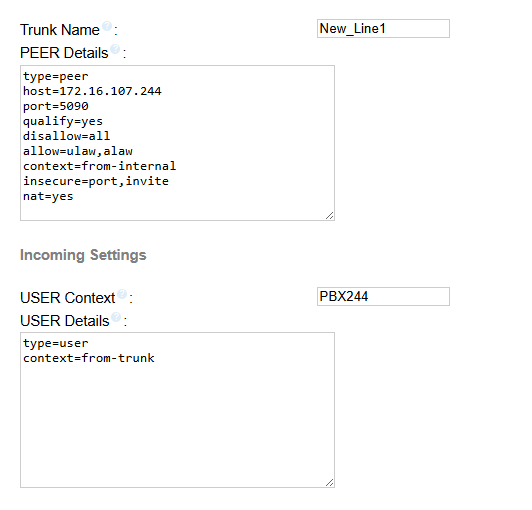
disallow=all is highly desirable. Without it, all codecs are enabled (and the allow is unnecessary). Having all codecs enabled can cause problems, including with over long packets.
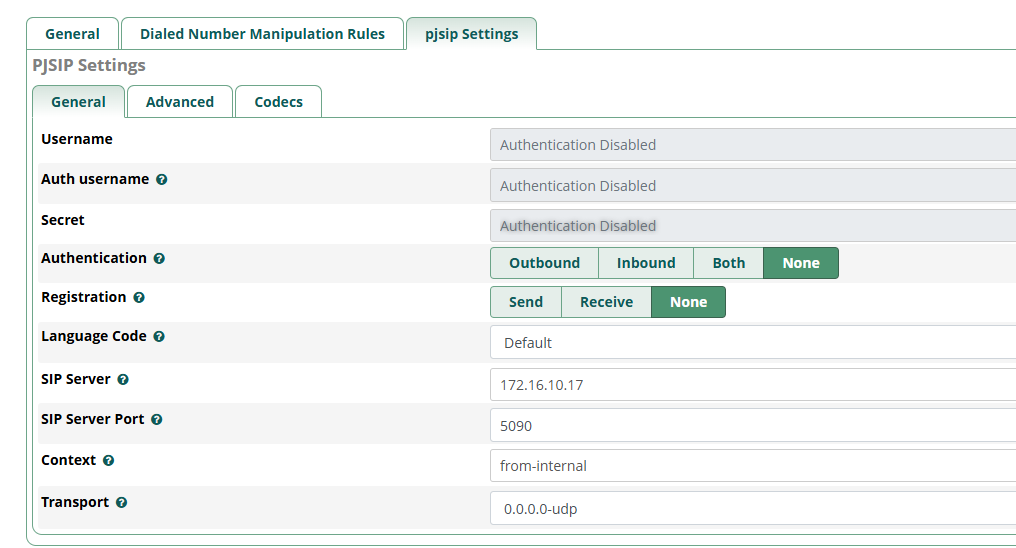
There are some questionable setting, which indicate copy and paste coding (and possibly a failure to adequately describe the network configuration), and they really shouldn’t be using chan_sip, if they want good support here, but none of these are the cause of their problem.
Also we need to see a proper SIP trace from the system using PJSIP and is rejecting the call. Showing it from the microsip side on the other PBX doesn’t tell us what the receiving PBX is doing with the call.
No need to make it complicated. A sip trace likely won’t tell us anything, they already said they’re getting a 503. They need to enable verbose logging and look at the full log to see WHY the 503 is being sent.